
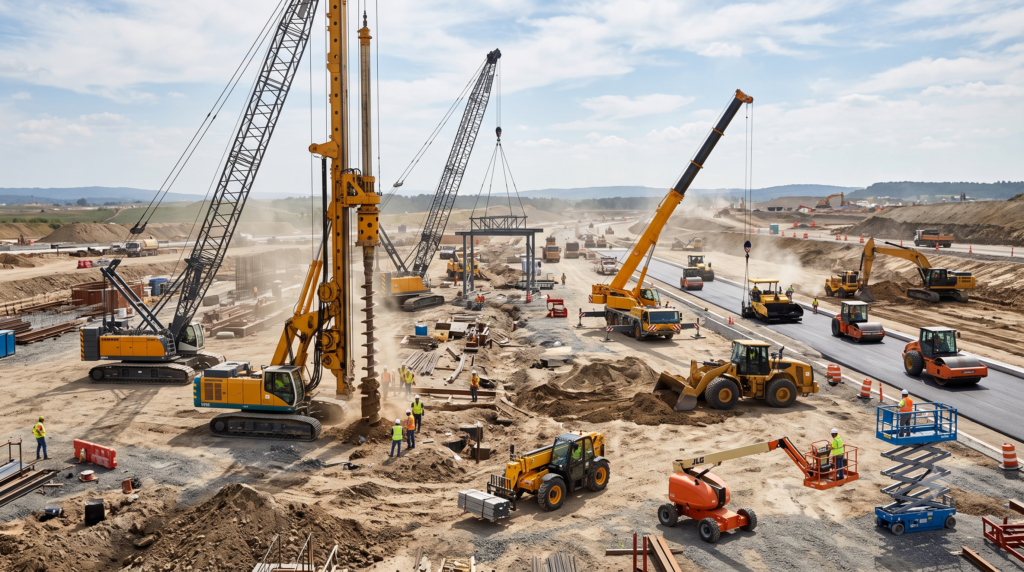
Construction projects demand reliable equipment, but owning an entire fleet is not always the most practical solution. From foundation work and heavy lifting to earthmoving, road construction, and working at height, contractors often need different machines at different stages of a project. This makes the choice between renting and buying construction equipment an important business decision.
Buying Construction Equipment: Long-Term Ownership
Purchasing equipment can be beneficial for companies with consistent, long-term requirements for specific machines. Owning equipment provides direct access to machinery whenever required and can make sense when utilisation remains high across multiple projects.
However, ownership involves more than the initial purchase price. Businesses also need to consider maintenance, repairs, insurance, storage, transportation, operator requirements, depreciation, and equipment replacement. For specialised machinery that may not be used regularly, these costs can significantly affect overall project economics.
Renting Construction Equipment: Flexibility When You Need It
Construction equipment rental allows contractors to access the machinery required for a specific project or phase without making a major capital investment. It can be particularly useful when equipment requirements vary from project to project.
With rental, contractors can select equipment based on project specifications and duration. This can include piling rigs for foundation and piling works, crawler cranes, all-terrain cranes and truck cranes for lifting operations, earthmoving equipment for excavation and material handling, and road construction equipment for infrastructure projects.
For projects involving work at height, equipment such as telehandlers, scissor lifts, and boom lifts can provide access to specialised machinery without the long-term responsibilities associated with ownership.
What Should You Consider Before Deciding?
The choice between renting and buying depends on several factors, including:
- Project duration: Short-term requirements may be better suited to rental.
- Equipment utilisation: Frequent, long-term use may justify ownership.
- Capital availability: Renting can help preserve capital for other project requirements.
- Maintenance and storage: Consider the ongoing responsibilities and costs of owning machinery.
- Equipment flexibility: Rental allows contractors to select different machines for different applications.
- Project requirements: Specialised equipment may be more practical to rent when it is needed only for specific projects.
The Practical Choice for Modern Construction
There is no one-size-fits-all approach to construction equipment. Many contractors use a combination of owned and rented machinery depending on project requirements, timelines, and utilisation.
With access to various categories of equipment including:
Foundation Equipment – Piling Rig, Vibro hammer
Lifting Equipment – All Terrain Crane, Truck Crane, Crawler Crane
Concrete Equipment – Self Loading Mixure, Boom Placer
Earthmoving Equipment – Skid Steer Loader, Excavator, Dozer, Wheel Loader
Compaction Equipment – Soil Compactor, Baby Roller, Tandem Roller, PTR
Road Construction Equipment – Paver, Motor Grader
Aerial Work Platforms – Scissor Lift, Telehandler, Boom Lift, Articulated Boom Lift,
renting equipment can help construction companies obtain the right machinery when they need it while maintaining greater flexibility in fleet planning.
AGGCON provides construction equipment rental solutions designed to support diverse project requirements. From piling and heavy lifting to earthmoving, roadwork, and elevated access, choosing the right equipment can help contractors plan projects more efficiently and keep operations moving.