
From Exception to Everyday: Women in India’s Equipment Rental Industry
Renu Aggarwal, Whole Time Director, AGGCON
September 4, 2026
India’s construction equipment rental industry is evolving rapidly. As contractors increasingly adopt rental models for greater flexibility, access to modern equipment and efficient asset utilization, the sector is becoming more organized and professional. Yet, one area where transformation is still needed at scale is women’s participation.
Occasionally, we see news stories or social media posts celebrating a woman operating an excavator, crane or other construction machine. These stories are encouraging because they challenge traditional perceptions. But they also raise an important question, why should a woman operating a machine still be considered news? The goal should be to reach a stage where it is simply seen as another professional doing her job. Importantly, women’s participation in equipment rental should not be limited to machine operations.
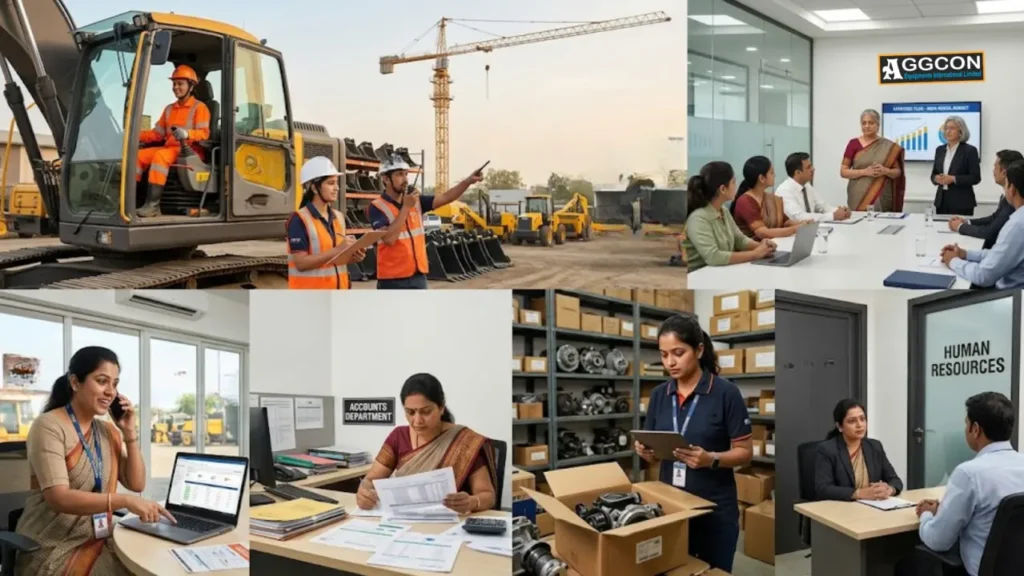
The rental ecosystem offers opportunities across operations, rental sales, accounts and finance, procurement, human resources, technology, administration and leadership. This creates a much larger opportunity for the industry. The focus should be on building multiple entry points for women and, equally importantly, creating pathways for them to develop skills, take responsibility and progress into leadership. At the same time, the industry must recognize that participation is influenced by more than recruitment. Workplace safety, appropriate facilities, transportation, working conditions, training, mentorship and access to challenging assignments all play a role in whether women can build sustainable careers.
Companies also need to question long-standing assumptions about which roles are “suitable” for women. Competence in equipment rental is not determined by gender. It comes from technical understanding, commercial judgement, communication, problem-solving, reliability and leadership. As the rental industry becomes increasingly technology-driven, opportunities are expanding further. Fleet management, asset utilization, digital systems, customer relationship management, procurement and financial management all require diverse skills and perspectives. This makes it even more important to develop talent based on capability rather than convention.
My own experience reinforces this belief. Women are contributing across executive, senior management, middle management and operational levels, in functions including accounts, operations, rental sales, human resources, grievance management and procurement. For us, this is not simply about meeting a diversity objective. It is about building a stronger organization by bringing different perspectives, experiences and capabilities to the table.
However, individual organizations cannot drive this transformation alone. The industry as a whole needs to invest in skills and career development, strengthen workplace safety and inclusivity, challenge traditional perceptions and create genuine opportunities for women to progress. Representation at entry level is important. But the real measure of progress will be women managing fleets, leading sales teams, heading functions, running branches and taking strategic decisions.
The objective, therefore, is not to celebrate the first woman doing something. It is to create an industry where her presence is expected, her contribution is valued and her opportunity to lead is unquestioned. That is when we will know the equipment rental industry has truly changed.