
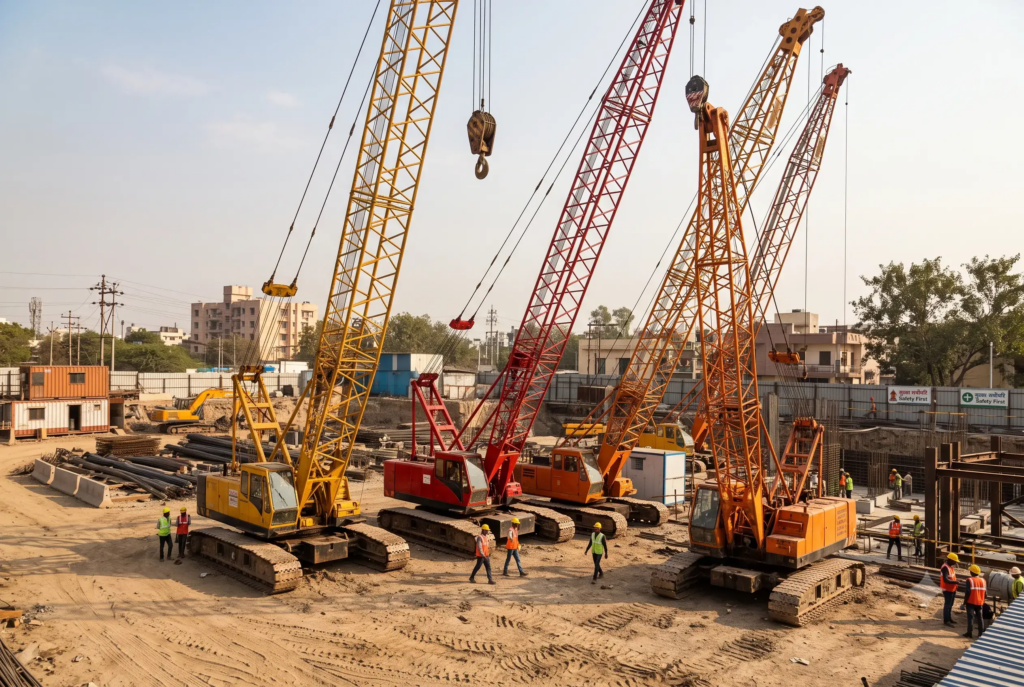
Crawler cranes are powerful lifting machines widely used in construction, infrastructure, industrial, energy, and heavy engineering projects. Their crawler tracks provide stability and allow them to operate on a variety of job sites. However, achieving optimum performance requires more than choosing a crane with sufficient lifting capacity. Proper planning, crawler crane operation, inspection, ground preparation, and strict safety practices are essential for productive and safe lifting.
Choose the Right Crawler Crane
The first step in effective crawler crane utilization is selecting the correct crane for the job. Consider the required lifting capacity, load weight, working radius, boom length, counterweight configuration, ground conditions, and site restrictions.
Always consult the manufacturer’s load charts and ensure the planned lift remains within the crane’s rated capacity. Remember that lifting capacity can change significantly with boom configuration and working radius. Selecting equipment based only on its maximum capacity can create unnecessary safety risks.
Plan Every Lift Carefully
Effective lift planning is a fundamental part of crawler crane safety. Before lifting begins, determine the load weight, dimensions, center of gravity, lifting points, required radius, travel path, and final placement area.
The worksite should also be assessed for slopes, excavations, underground services, overhead power lines, nearby structures, traffic, and pedestrian movement. A competent person should review the lifting plan and identify hazards before the crane is put into operation.
Check Ground Conditions
Crawler cranes can provide excellent stability, but they still require suitable ground conditions. The crane should be positioned on firm, adequately prepared ground, with ground bearing capacity assessed for the planned load.
Soft soil, voids, trenches, recently backfilled areas, or waterlogged ground can affect stability. Ground conditions should be reassessed after heavy rain or significant changes to the work area.
Follow Safe Crawler Crane Operation
Safe crawler crane operation requires trained and authorized operators who understand the crane’s controls, load charts, limitations, and manufacturer’s instructions.
Never exceed the rated capacity or operate outside the approved configuration. Avoid side loading, dragging loads, shock loading, sudden movements, and unauthorized modifications. Loads should be lifted and lowered smoothly and kept under control throughout the operation.
Establish an exclusion zone around the crane and suspended load. Personnel should never stand beneath suspended loads or enter restricted areas without authorization.
Maintain Clear Communication
Good communication between the operator, signal person, rigging team, and site supervisor is essential. Use standardized hand signals or an agreed radio communication system when visibility is restricted.
Everyone involved should understand who has authority to direct the lift. A clear stop signal should be recognized by all personnel, and any worker should be able to stop the operation if an immediate safety concern arises.
Crawler Crane Checklist: Pre-Lift Safety Inspection
A crawler crane checklist can help the lifting team verify critical safety requirements before starting work:
- Crane inspection completed and no safety-critical defects identified
- Operator is trained, competent, and authorized
- Correct load chart and crane configuration confirmed
- Load weight, dimensions, and center of gravity verified
- Lifting radius and boom length confirmed
- Ground stability and bearing capacity assessed
- Boom, wire ropes, hooks, sheaves, pins, and connections inspected
- Slings, shackles, spreader beams, and other lifting accessories inspected and rated appropriately
- Safety devices and warning systems checked
- Overhead power lines and other obstructions identified and controlled
- Exclusion zone established around the lifting and slewing area
- Weather and wind conditions are within permitted operating limits
- Communication method and emergency signals agreed upon
- Lift plan and risk assessment reviewed by the responsible team
- Trial lift conducted where appropriate to confirm load stability
Regular Inspection and Maintenance
Preventive maintenance is another important element of crawler crane safety. Inspect and maintain crawler tracks, boom components, wire ropes, hooks, hydraulic systems, brakes, safety devices, and structural components according to the manufacturer’s recommendations.
Any defect that could affect safe operation should be reported immediately, and the crane should remain out of service until the issue has been properly resolved.
Always remember
Optimum crawler crane utilization depends on proper equipment selection, detailed lift planning, stable ground conditions, safe crawler crane operation, effective communication, regular inspection, and disciplined maintenance. Using a comprehensive crawler crane checklist before each lift helps identify potential hazards and reinforces a strong safety culture.
Most importantly, productivity should never come at the expense of safety. Following manufacturer recommendations, approved lifting procedures, site-specific risk assessments, and applicable regulations can help ensure efficient and safe crawler crane operations.